Local relining guide
What relining actually is, and when it suits Manly
Sand does not hold a trench wall
This is the whole argument in one sentence. Excavating sand beyond a shallow depth means the walls run in, so the trench has to be battered back to a safe angle or shored.
Either makes the excavation substantially larger than the pipe being repaired, and both cost real money that does not appear in a per-metre figure.
So an excavation quote here that looks comparable to one in a clay suburb has probably not accounted for it.
The water table is a real line item
On low-lying ground near the beach, a deep trench can reach groundwater, and a trench that fills with water needs dewatering before anybody can work in it.
That is not an unusual complication here. It is a normal feature of digging to sewer depth close to the sea.
It is worth asking any excavation quote what it assumes about it, because the answer is frequently that nobody has.
How it works, without the brochure language
A resin-saturated liner goes into the damaged section, is inflated against the existing pipe wall, and cures there into a new pipe formed inside the old one.
It is continuous, smooth, slightly smaller in bore, and structural in its own right rather than a coating over a problem.
It goes in through existing access, so no ground is opened and no trench has to be supported.
Open joints are how sand gets in
On this soil the recurring problem is frequently not roots. It is fine sand entering the line at the joints and settling in the low points.
Clearing takes out what has arrived and does nothing about the openings, which is why the line refills on the same schedule.
A liner removes every joint along the section, which addresses the cause rather than the symptom.
Patch, or the whole run
Where the camera shows one bad joint in an otherwise sound pipe, a patch liner over that section is the proportionate answer and it is considerably cheaper.
Where the footage shows openings along the length, lining the run is the honest recommendation, because patching one of many buys a season.
The footage decides which, and you should see it rather than be told about it.
When digging genuinely is the better answer
Shallow, close to an existing access point, under open lawn, in dry ground and away from a structure. In that combination an excavation is straightforward and frequently cheaper.
It is not the usual situation on this coast, but it does happen, and we will say so rather than sell a liner into it.
That is why both figures come together rather than one being presented as the only option.
Cast iron near the sea is a different case
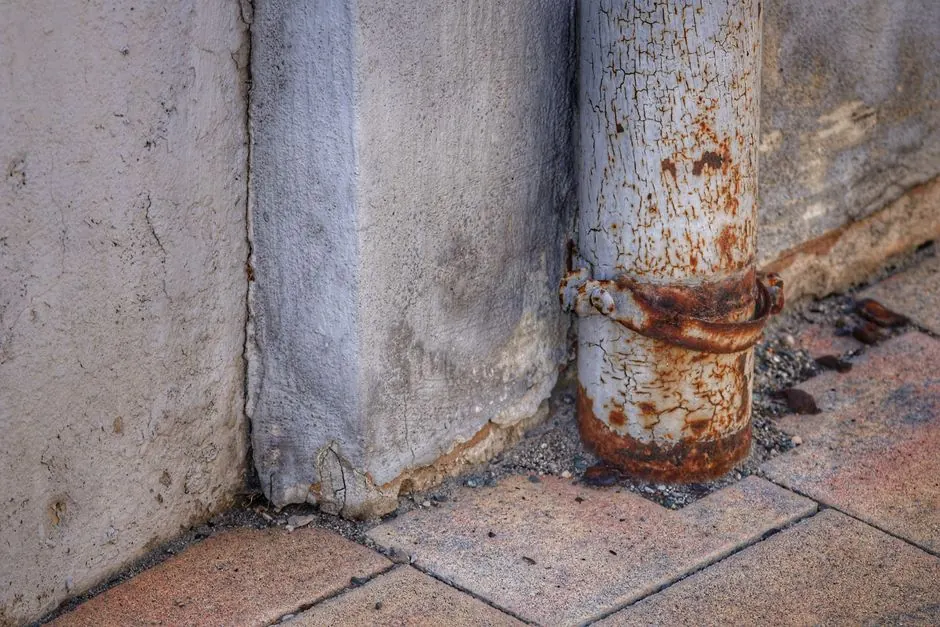
Where an older property still runs cast iron, salt has been attacking it from outside while the contents worked on it from within, and the bore may be well down.
A liner restores a smooth continuous surface, which on a narrowed stack is a capacity improvement as well as a seal.
Whether there is enough sound material left to line is a question the camera answers, and the answer changes over time.
What relining cannot do
It restores the pipe. It cannot change the gradient the pipe was laid at, because the liner takes the shape of the host it cures inside, settled sections included.
On sand that moves, a settled section is a real possibility rather than a remote one.
Grade gets checked from the footage before a quote is written, and where it is the problem we will say so.
Junctions, and the step people forget to ask about
A liner covers the openings where branch lines join, so those have to be cut back open from inside once the resin has cured. It is routine and it gets confirmed on camera.
A missed one stops that branch draining, which is immediately obvious rather than hidden.
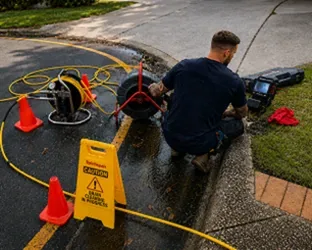
Ask to see the after footage. It exists either way and it is how you check the junctions are open.
You keep both recordings
Before and after, plus a written account of what was found and what was done. Yours whatever it shows.
On a let property, keep it with the property records rather than personally, because whoever manages it next will need it.
It is also the answer at sale, when an inspection finds a lined section and somebody has to explain what it was for.