Local gas guide
What gas work in Manly actually involves
If you can smell gas, do this first
Open the house up, get everybody outside, and touch nothing electrical on the way past. Ring from outdoors.
Turn the gas off at the meter if you can reach it safely. If it sits behind the smell, leave it and get out.
On a let property, make sure the house information includes where the meter is. Guests will not know and cannot be expected to find it.
Corrosion attacks the connections, not the pipe
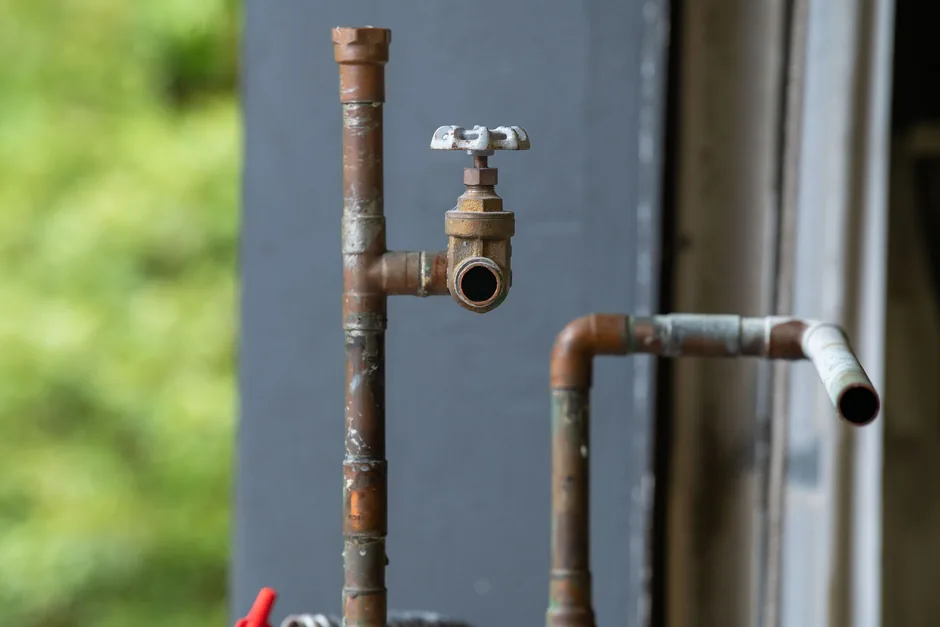
Sound copper does not simply fail. What fails is a fitting, and outdoors on this coast the fittings are where chloride does its work.
Threads, unions, regulator connections and the points where a run passes through a wall are all more vulnerable than the pipe between them.
So an inspection here looks at the joints rather than at the length, which is the opposite of what people expect.
The meter and regulator are outside too
Everyone thinks of the pipework and nobody thinks of the box on the wall, which sits in the same salt air and does the same ageing.
A corroded regulator or a seized isolation valve at the meter is a genuine problem, and the valve one only becomes apparent at the worst possible moment.
It is worth including in any visit rather than booking on its own, and it takes minutes.
Outdoor kitchens and barbecue points
A permanently plumbed outdoor kitchen is a gas installation rather than an accessory, and on this coast every part of it is exposed.
It gets sized for the run and the load, pressure tested and certified, and the fittings get chosen knowing what the environment will do to them.
It is also worth looking at more often than an indoor installation, for exactly the same reason.
Sizing, when the new appliance is bigger
Gas lines are sized for a load. A six-burner cooktop, or a cooktop plus a continuous flow hot water unit, can ask considerably more than the original run was built to deliver.
The input rating on the appliance plate is the number the calculation runs on, and a photograph of it is enough to start.
Where the sums do not work, appliances starve each other, and a burner that drops off whenever somebody runs a shower is nearly always this.
Clearances near the beach
Every outdoor appliance has required clearances to combustible material, and a flue terminal has required distances from windows, doors and vents.
Screening added to protect a unit from weather is a common way a clearance gets encroached with the best of intentions.
It is worth checking whenever anything has been built or planted around an appliance.
Ventilation, and holiday houses shut up for months
A property closed for a season and then opened for a busy fortnight is a different pattern from a house lived in continuously.
Appliances that have sat idle deserve a check before heavy use rather than after, and a flue that has been unused can have obstructions it did not have before.
Lighting it to see what happens is the wrong test. That is what a service is for.
We test what we connect to
Certifying a new appliance on a line losing pressure elsewhere achieves nothing, so the existing installation gets tested as part of connecting anything new.
On coastal fittings that occasionally finds something, and when it does we tell you before doing the work rather than after.
It is why a straightforward appliance swap sometimes turns into a slightly longer conversation.
Why gas work is certified and most plumbing is not
Because the parts that matter are invisible once it is finished. Sizing, pressure testing, clearances, flueing and ventilation all get covered up on the day.
A working appliance tells you the gas got there. It tells you nothing about the diameter of the pipe, whether the line held pressure, or where the flue ends up.
The certificate exists to record exactly those things, which is why it is worth keeping and worth chasing if you never got one.
The certificate, and letting properties
Every gas job we do is certified and lodged, with a copy to you. It records what was done, that it was tested, and under whose licence.
On a property that is let, keep it with the property records rather than personally, because the person managing the property may not be the person who arranged the work.
It is what an insurer asks for after an incident, and on a let property that question comes up more often.